

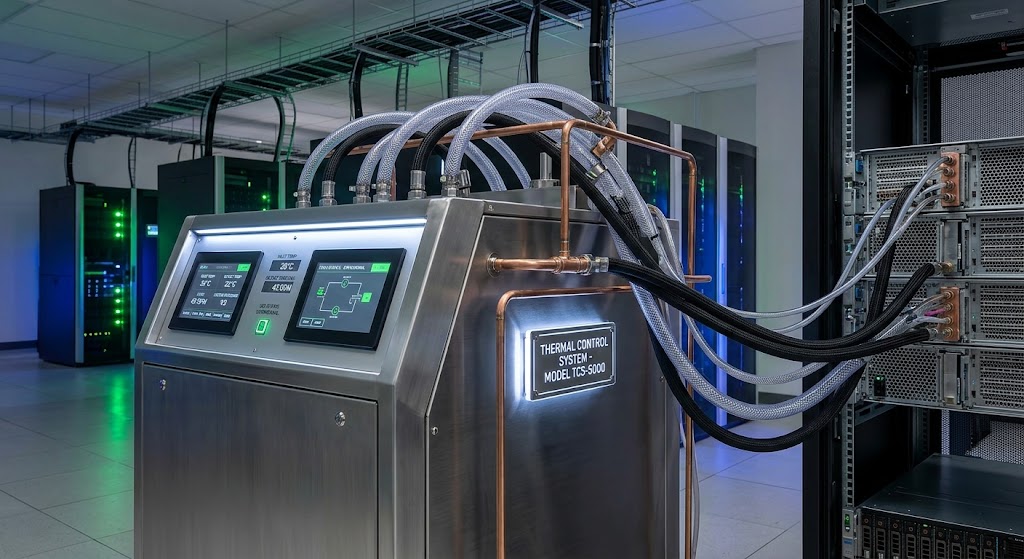
A thermal control system keeps equipment at a safe, stable temperature. It adds heat when parts run cold. It removes heat when parts run hot. As a result, machines perform well and last longer.
Thermal Control System Definition
A thermal control system manages heat flow in a device, vehicle, or facility. It senses temperature, compares it to a target, and then acts. Moreover, it repeats this cycle continuously.
Engineers also call it thermal management. Buyers may see it labeled as a cooling system, heating system, or climate control unit. However, the goal stays the same: keep temperature within a set range.
Why Thermal Management Matters
Heat is the enemy of electronics. Even a small rise can shorten component life. Likewise, extreme cold can slow batteries and thicken lubricants.
Good thermal control delivers clear benefits:
- Higher equipment reliability
- Longer service life
- Better energy efficiency
- Safer operation
- Consistent product quality
In addition, poor control leads to downtime. Therefore, many industries treat it as a core design priority.
Core Components of a Thermal Control System
Every system includes a few basic parts. Together, they sense, decide, and act.
Temperature Sensors
Sensors measure real-time conditions. Common types include thermocouples, RTDs, and thermistors. Accurate readings drive every decision that follows.
Controllers
The controller reads sensor data. Then it compares the data to a setpoint. Finally, it commands the heating or cooling devices. Many units use PID logic for smooth, precise results.
Heating Elements
These parts add heat when needed. Examples include resistive heaters, heat pads, and heat pumps. They protect equipment from cold conditions.
Cooling Devices
These parts remove excess heat. Fans, heat sinks, chillers, and liquid loops are common choices. Each option suits a different power level.
Heat Transfer Components
Heat pipes, cold plates, and thermal interface materials move heat efficiently. Consequently, they reduce hot spots and improve consistency.
Types of Thermal Control Systems
Designers select a type based on load, space, and budget.
Passive Thermal Control
Passive systems use no power. They rely on insulation, coatings, heat sinks, and natural convection. They are simple, quiet, and reliable. However, they offer limited capacity.
Active Thermal Control
Active systems use powered parts such as fans, pumps, and compressors. They handle larger heat loads. Furthermore, they allow precise temperature regulation. The trade-off is added cost and energy use.
Hybrid Systems
Hybrid designs combine both approaches. For instance, a heat sink may work with a small fan. This balance often delivers strong performance at moderate cost.
Common Applications
Thermal control appears in many sectors. Here are some leading examples:
- Electronics: Servers, telecom cabinets, and power converters
- Automotive: Electric vehicle batteries and motors
- Aerospace: Satellites and avionics
- Medical: Imaging devices and lab equipment
- Industrial: Process machinery and storage rooms
Each field has unique demands. Therefore, no single design fits every case.
Key Factors Engineers Should Evaluate
Engineers must define requirements early. Specifically, consider these points:
- Heat load: Calculate total watts to dissipate.
- Temperature range: Set minimum and maximum limits.
- Environment: Account for dust, humidity, and altitude.
- Size and weight: Check available space.
- Power budget: Confirm energy availability.
- Noise limits: Review acceptable sound levels.
Additionally, simulation tools help validate designs before prototyping. As a result, teams avoid costly rework.
What Buyers Should Look For
Buyers do not need deep technical knowledge. Nevertheless, a few checks protect the investment.
Performance Specifications
Review cooling capacity and temperature accuracy. Compare these figures against your actual needs. Oversizing wastes money, while undersizing risks failure.
Reliability and Warranty
Ask for mean time between failures data. Also, check the warranty length. Strong terms signal supplier confidence.
Energy Efficiency
Efficient units lower operating costs. Over time, these savings often exceed the purchase price.
Maintenance Needs
Look at filter changes, fluid checks, and part replacement. Simple upkeep reduces long-term expense.
Certifications and Support
Confirm relevant safety and quality standards. Moreover, verify local technical support. Fast service limits downtime.
Common Mistakes to Avoid
Many projects stumble on the same issues. First, teams underestimate peak heat loads. Second, they ignore ambient conditions. Third, they treat thermal design as an afterthought.
Instead, plan thermal control from the start. Early planning saves time, money, and redesign effort.
Emerging Trends in Thermal Management
The field keeps evolving. Notably, liquid cooling is growing in data centers. Meanwhile, smart controllers use sensors and analytics to predict problems. Likewise, new materials improve heat transfer in smaller packages.
Sustainability also shapes designs. Consequently, manufacturers now focus on low-energy, low-emission solutions.
Final Thoughts
A thermal control system protects performance, safety, and lifespan. Engineers gain reliable designs when they define loads and limits early. Buyers gain value when they compare specifications, efficiency, and support.
In short, the right system fits the application, not just the budget. Start with clear requirements, and the best option becomes easier to find.
Leave A Comment